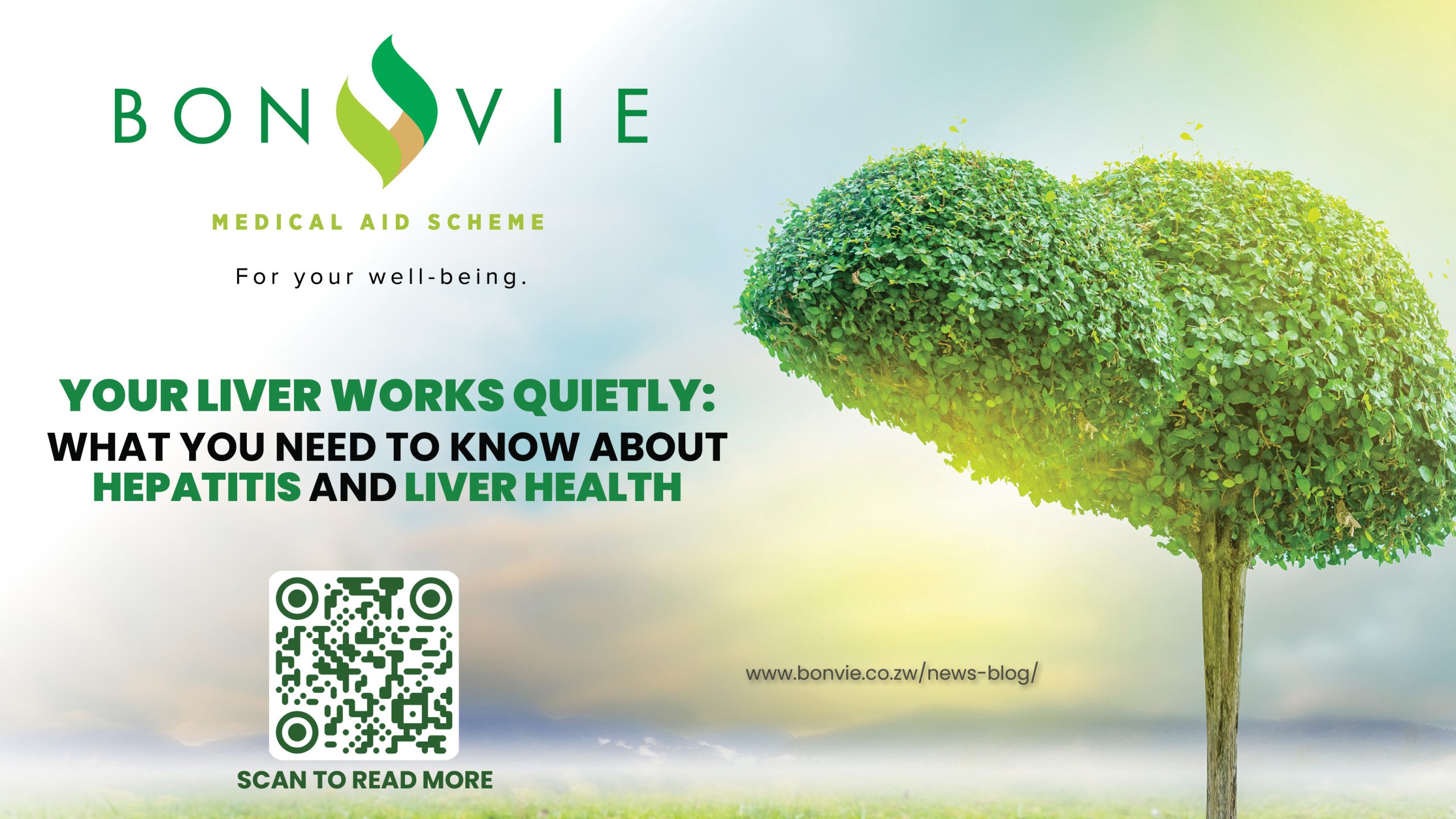
Your Liver Works Quietly: What You Need to Know About Hepatitis and Liver Health
Written by Professor Stephen Mashingaidze and Rumbidzai Mukori-William for BonVie Medical Aid scheme
Your liver is a “workhorse organ” that performs hundreds of vital tasks including metabolism, detoxification, and immune defense. It can continue functioning even when up to 75% is damaged, hence emphasis on protecting the liver through prevention and early detection is critical. Once cirrhosis or liver cancer develops, treatment options become limited and outcomes worsen.[1]
Understanding Hepatitis
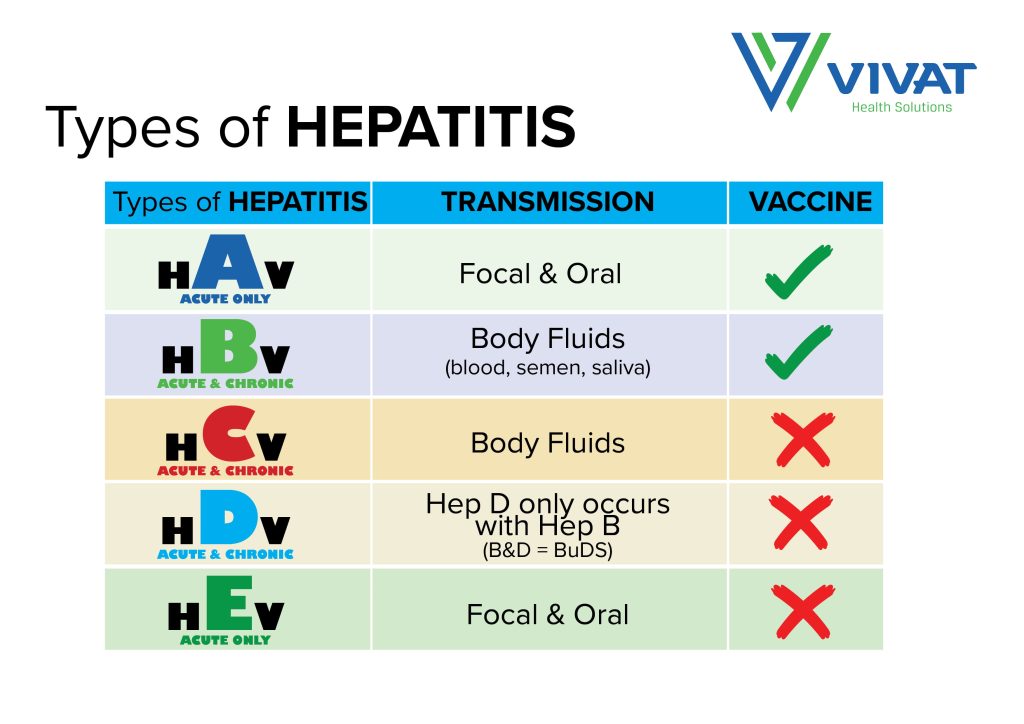
Hepatitis means inflammation of the liver. The most common viral types are A, B, and C.[2]
Hepatitis A – spreads through contaminated food and water, or close contact with an infected person. It is usually short-term and the body clears it.[3]
Hepatitis B – spreads through blood, unsafe medical procedures, sexual contact, and from mother to child. It can become chronic and lead to cirrhosis and liver cancer.
Hepatitis C – spreads mainly through blood. It often causes no symptoms for 10–20 years, with damage found only in later stages.[4]
Globally, 296 million people live with chronic Hepatitis B and 58 million with chronic Hepatitis C. Most cases remain undiagnosed.[5]
Why Testing Saves Lives
You cannot know your hepatitis status by how you feel. A simple blood test shows if you have been exposed, if you are currently infected, and if you are immune.
Testing is critical for three reasons. First, antiviral treatment for Hepatitis B and curative treatment for Hepatitis C can prevent progression to cirrhosis and liver cancer. Second, diagnosis allows you to protect family members and partners from transmission. Third, a negative result means you can get vaccinated against Hepatitis A and B to stay protected.
WHO recommends that all adults should be tested for Hepatitis B and C at least once in their lifetime.[5]
Picture courtesy of Freepik
Prevention: Vaccines and Safe Practices
Most liver disease is preventable.
Vaccination: Safe and effective vaccines exist for Hepatitis A and B. The Hepatitis B vaccine is one of the most effective tools we have to prevent liver cancer.
Hygiene: Handwashing, safe food preparation, and clean water prevent Hepatitis A.
Safe practices: Use sterile medical equipment and avoid sharing razors, toothbrushes, or needles to reduce Hepatitis B and C risk.
Medication safety: The liver processes every drug you take. Overuse of painkillers like paracetamol and mixing alcohol with medication are leading causes of liver injury. Limiting alcohol also significantly reduces risk.[6]
Breaking the Stigma
Liver disease can affect anyone — students, parents, and professionals. Stigma around hepatitis prevents people from testing and delays treatment. Testing should be seen as an act of responsibility. With early diagnosis and proper care, most people with viral hepatitis can live long, healthy lives.[7]
3 Actions To Take This Month
Get screened: Ask your healthcare provider for Hepatitis B and C tests during your next check-up.
Check vaccination: Ensure you and your children are up to date on Hepatitis A and B vaccines.
Protect your liver daily: Drink water, add curcumin, black pepper, eat balanced meals, exercise, limit alcohol, and take medications only as prescribed.
Picture courtesy of Freepik
Conclusion
Your liver works quietly every day to keep you healthy. Don’t wait for symptoms to take action. Through testing, vaccination, and simple daily habits, we can prevent most liver diseases and protect the health of our families and communities.
Prevention is always easier than cure.
References
1. National Institute of Diabetes and Digestive and Kidney Diseases. _Liver: Anatomy and Functions_. NIDDK, 2023. 2. World Health Organization. _Hepatitis A Fact Sheet_. WHO, 2024. 3. World Health Organization. _Hepatitis B Fact Sheet_. WHO, 2024. 4. World Health Organization. _Hepatitis C Fact Sheet_. WHO, 2024. 5. World Health Organization. _Global Hepatitis Report 2024_. WHO, Geneva, 2024. 6. Harvard Health Publishing, Harvard Medical School. _The importance of liver health_. Harvard Medical School, 2022. 7. Harvard Health Publishing, Harvard Medical School. _Hepatitis: What you need to know_. Harvard Medical School, 2023.