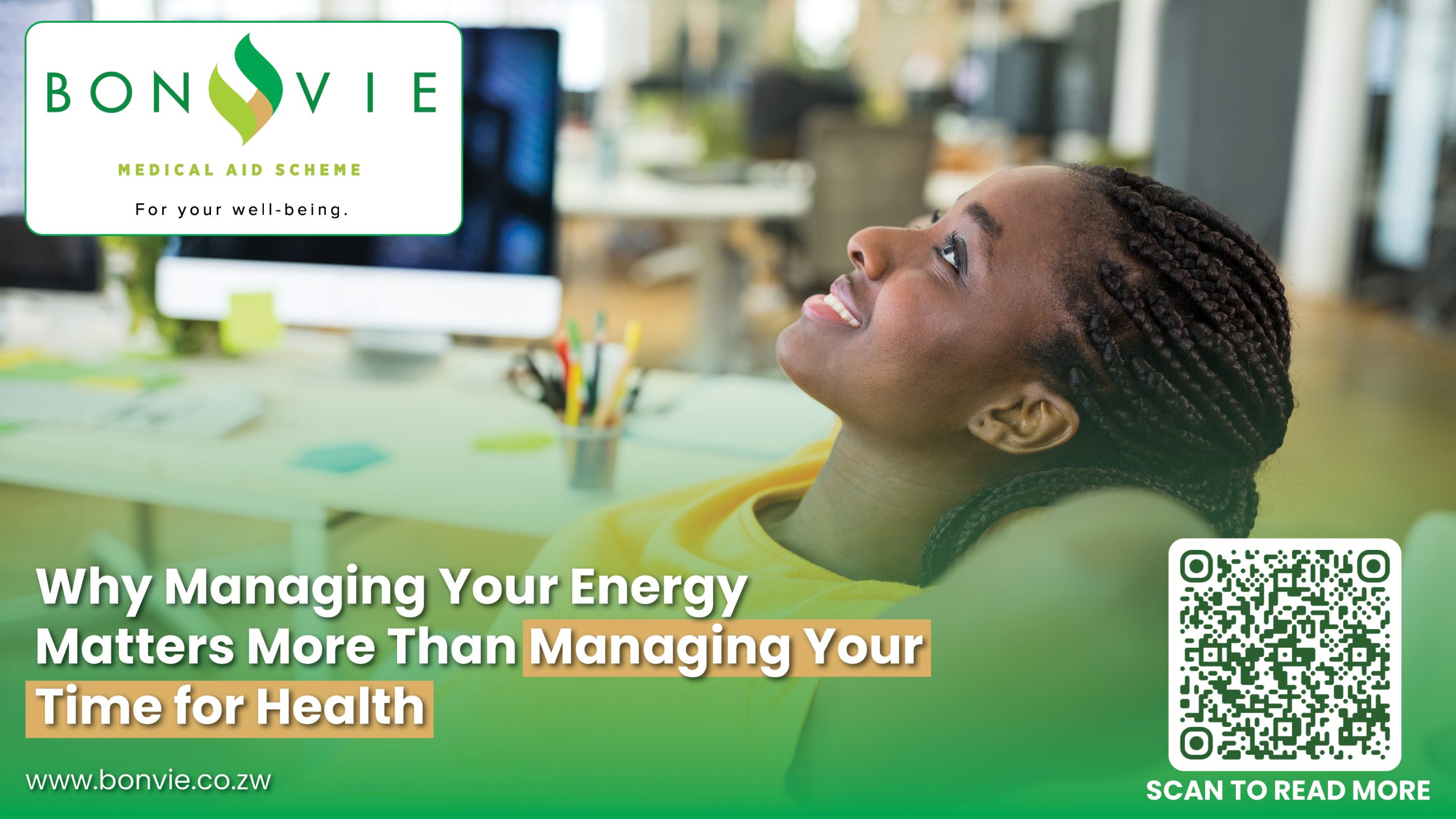
Why Managing Your Energy Matters More Than Managing Your Time for Health
Written by
Lolitaire Moyo-Healey.
M.Ost DO, UKIHCA-RHC for BonVie Medical Aid scheme
Think about the last time you ended a day having completed everything on your to-do list and felt completely exhausted. You were organised, showed up and did the work and yet by evening, you had no energy left. When you allow yourself to consistently get depleted to this level it has some detrimental snowball effects. Such as making poorer food and eating decisions, less motivation for physical activity and increased irritability which can strain relationships [6]. This experience has a name, and it is not laziness. It is what happens when you manage your time well, but ignore your energy entirely. It is called an energy debt as it accumulates faster than it is repaid [1].
While time is fixed, energy is renewable if you know how to manage it. If you manage it well, it has a positive impact on your long-term health without jeopardising productivity.
How You Schedule Your Life
Picture courtesy of Freepik
Many of us approach our days the same way. We might fill the calendar, push through the fatigue and rest when everything is done. The problem is that everything is never done, and your body does not run on a to-do list.
Your biology operates on cycles called ultradian rhythms.These are roughly 90-minute windows of high mental and physical output, followed by natural energy dips where your body signals it needs a brief recovery [4]. These cycles continue all day.
That mental fog and slow feeling around mid-morning or mid-afternoon could be your body and mind asking for a 5-10 minute break. When you push through those dips repeatedly (everyday) you start accumulating an energy debt that compounds over time. This disrupts your circadian rhythm which is the 24-hour biological clock that regulates your immune system, metabolism, cortisol stress levels, and mood [5].
What Continuously Running on Empty Actually Does to Your Body
This is where the conversation moves from productivity to health. Chronic burnout (the result of prolonged energy depletion without adequate recovery) is a significant predictor to type 2 diabetes, heart disease, musculoskeletal pain, insomnia, depressive symptoms, and even early death before the age of 45 [2]. These are the outcomes from not allowing yourself rest and recovery.
This also involves sleep. Poor sleep has been linked to widespread negative effects on cardiovascular, immune and metabolic health. [3]
Picture courtesy of Freepik
Your Four Types of Energy
Picture courtesy of Freepik
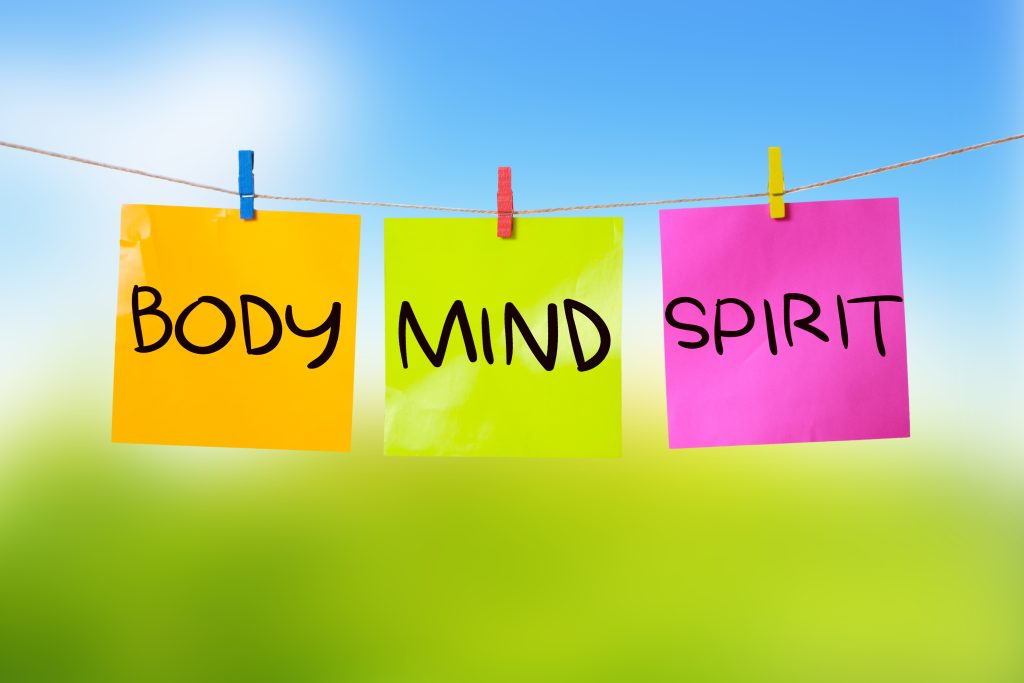
Performance psychologists developed a framework that claimed humans draw from four distinct sources of energy. All four need to be actively managed [1].
Physical energy is your base. Without it, nothing else works well. It is sustained through consistent sleep, regular movement, and food that energizes you steadily instead of spiking your blood sugar.
Emotional energy is your capacity to show up in your relationships and handle stress. Chronic conflict, isolation, and unresolved tension all drain this. It is refilled through genuine connection, healthy boundaries, and activities that restore you.
Mental energy is your focus and ability to think clearly, make wise decisions and solve problems. Protecting this energy means being more deliberate about where your attention goes.
Spiritual energy, in this context, is simply about purpose. Living in alignment with what genuinely matters to you including your values, your relationships and your work. This acts as a buffer against burnout and is a well-documented protective factor for mental health.
Picture courtesy of Freepik
Changes you Can Make Today
Guard your sleep – Aim for 7–9 hours 5 out of 7 days a week [3].
Notice your natural energy dips – A 10–20 minute break when your energy fades is not procrastination. It restores your mental capacity and lets you re-engage fully [4].
Prioritise movement – Physical exercise is one of the most well-evidenced ways to stabilise your body clock, regulate mood, and renew energy [5].
Notice your energy drains – Pay attention to what consistently drains your energy, and make conscious decisions about how you respond.
Conclusion
Managing your energy will not add hours to your day, but it will change what you are able to do with the hours you have. More importantly, it will protect your long-term health to enjoy the days, months and years you have.
References
Loehr, J. & Schwartz, T. (2003). *The Power of Full Engagement: Managing Energy, Not Time, Is the Key to High Performance and Personal Renewal*. Free Press / Simon & Schuster. Available at: https://www.simonandschuster.com/books/The-Power-of-Full-Engagement/Jim-Loehr/9780743226752
Salvagioni, D.A.J., et al. (2017). Physical, psychological and occupational consequences of job burnout: A systematic review of prospective studies. *PLOS ONE*. Available at: https://www.ncbi.nlm.nih.gov/pmc/articles/PMC5627926/
Institute of Medicine (US) Committee on Sleep Medicine and Research. (2006). Extent and Health Consequences of Chronic Sleep Loss and Sleep Disorders. In: *Sleep Disorders and Sleep Deprivation: An Unmet Public Health Problem*. National Academies Press. Available at: https://www.ncbi.nlm.nih.gov/books/NBK19961/
Kleitman, N. (as cited in Rejuvenated Ltd, 2025). Ultradian Rhythms and the Basic Rest-Activity Cycle. Available at: https://rejuvenated.com/blogs/journal/ultradian-rhythms/
Ramos-Campo, D.J., et al. (2022). The Impact of Physical Activity on the Circadian System: Benefits for Health, Performance and Wellbeing. *Applied Sciences*, 12(18), 9220. Available at: https://www.mdpi.com/2076-3417/12/18/9220
Author
Lolitaire Moyo-Healey
M.Ost DO, UKIHCA-RHC, Founder, Registered Osteopath, Mindfulness Practitioner, Accredited Health + Life Coach