Why Early HIV Testing Still Matters in 2025: A Call for Accelerated Access in Zimbabwe
Written by Professor Stephen Mashingaidze and Rumbidzai Mukori-William for BonVie Medical Aid scheme
HIV is one disease that was once considered to be associated with a lot of stigmatization, over the years this has changed, due to a lot of awareness has been done to remove this mentality, and fear of testing for HIV. Despite remarkable progress toward the 95‑95‑95 targets, there is still a high stigma associated with being HIV positive and the number of late HIV diagnosis persists as a critical barrier to epidemic control in Zimbabwe. Recent national data (2024) reveal that *18 % of new diagnoses* occurred at CD4 < 200 cells/μL, a stage where mortality risk is markedly higher [1]. In Zimbabwe, where an estimated 11 % of adults live with HIV, early testing remains the most powerful tool to curb the epidemic. Knowing one’s status opens the door to life‑saving treatment, prevents transmission to partners and newborns, and empowers individuals to make informed health choices. This article breaks down the science, the process, and the impact of HIV testing in a way that every reader can understand.
Burden of late diagnosis in Zimbabwe
Zimbabwe has achieved a 45 % reduction in AIDS‑related deaths since 2015, yet the first half of 2025 saw a slight rise (5,932 deaths, +220 vs. 2024), signalling gaps in early detection [2][5]. The Joint United Nations Programme on HIV/AIDS (UNAIDS) 95‑95‑95 framework hinges on the *first 95 %*—people who know their status. As there is a high transmission potential of untreated individuals contributing up to 70 % of new infections [6].
Why testing matters?
Immediate health benefits: Starting antiretroviral therapy (ART) early preserves the immune system and reduces the risk of opportunistic infections.
Community safety: Achieving an undetectable viral load eliminates sexual transmission (U = U – Undetectable = Untransmittable) [3]. Without timely diagnosis, ART initiation is delayed, viral load remains uncontrolled, and preventable deaths continue. Late diagnosis can increase risk of a number of opportunistic infections, such as pneumonia, tuberculosis meningitis not only to the affected person but also to those in contact with them.
Breaking stigma: Open discussion and routine testing challenge the fear and discrimination that keep the virus hidden.
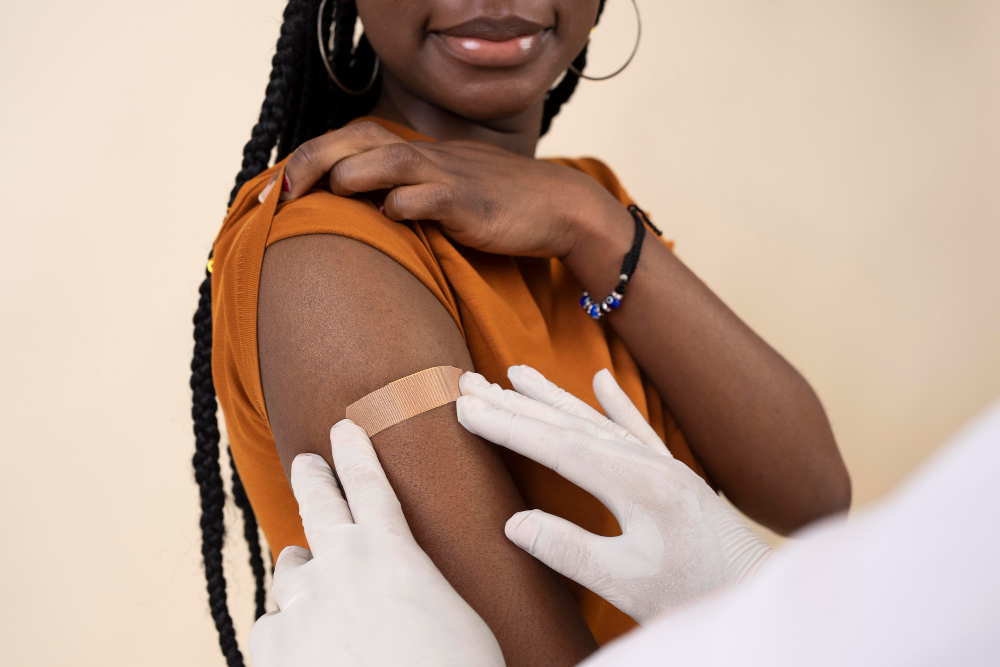
Image Courtesy of Freepik
How the Body Responds to HIV
After exposure, the virus follows a predictable timeline:
Viral replication (0‑2 weeks): The virus multiplies rapidly.
p24 antigen emergence (2‑4 weeks): A protein detectable by newer tests.
Antibody production (3‑12 weeks): The immune system creates antibodies that most rapid tests detect.
Understanding this window helps explain why a test taken too early can miss an infection.
Evidence‑Based Testing Strategies
A wide variety of tests are available, ranging from:
1. Rapid Antibody Tests (Finger‑prick or Oral Swab)
Where: Community outreach, VCT centres, self‑testing kits (OraQuick, Atomo) [4].
2. 4th‑Generation Antigen‑Antibody Combo (Blood)
Detects: Antigen and antibodies.
Window: 18‑45 days (reliable by 6 weeks).
Setting: District hospitals, private labs.
3. Nucleic Acid Test (NAT / PCR)
Detects: HIV RNA (viral load) or proviral DNA.
Window: As early as 10‑14 days.
Use: Blood banks, early infant diagnosis, high‑risk exposures after PEP failure [5].
4. Self‑Test Kits (Approved by MoHCC)
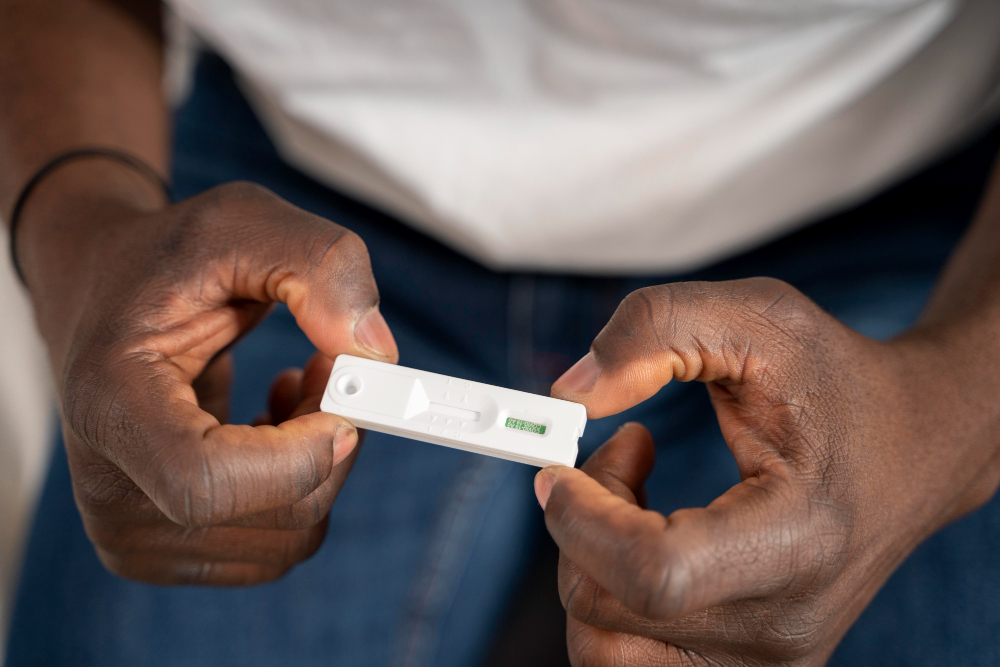
These are self testing kits such as oral fluid kits (OraQuick Self‑Test) approved for unsupervised use, which can be done at home for increased privacy. A 2023 pilot in Mutare showed 21% of self‑test users linked to ART within 7 days, versus 9 % in standard VCT [8].
Convenient: Home testing, results in 20 minutes.
Important: A reactive (positive) result must be confirmed at a health facility.
Image Courtesy of Freepik.com
Zimbabwe’s National Testing Algorithm
Screening: Rapid antibody test or 4th‑gen combo.
Reactive Result: Confirmed with a different rapid or NAT.
Result Delivery:
Negative: Counsel on window period; repeat at 3 months if recent risk.
Positive: Same‑day ART initiation, baseline CD4/VL, TB screening [6].
Community‑Based Outreach
In Zimbabwe, there are many options available for testing of HIV, ranging from mobile VCT vans* in markets, mining sites, and rural growth points. They are usually stationed in areas with high traffic, for easier accessibility for those who may be in remote areas or are not able to visit the clinics or New start centers. Door‑to‑door testing in high‑prevalence districts (≥ 15 %), is also integrated with other tests such as TB, STI and cervical cancer screening being advised for follow up once tested HIV positive. Provider‑Initiated Testing (PITC) is also made available as routine testing in antenatal care, family planning, and inpatient wards. This opt‑out approach has proven to be effective and increased testing coverage from 62 % to 89 % in Harare Central Hospital (MoHCC, 2024).
Image Courtesy of Freepik.com
Conclusion
Early HIV testing remains the cornerstone of epidemic control. Zimbabwe has the tools, guidelines, and community networks needed to shift from late diagnosis to same‑day treatment. By prioritizing same‑day rapid testing, index case tracing, self‑testing, and male‑focused outreach, we can close the diagnosis gap, reduce mortality, and accelerate progress toward 95‑95‑95. The 2025‑2027 roadmap offers a phased, evidence‑based plan; success hinges on political commitment, sustained financing, and community engagement.
References
Ministry of Health and Child Care (MoHCC), Zimbabwe. _National HIV/AIDS Guidelines 2022‑2025._Harare: MoHCC; 2022.
UNAIDS. _Zimbabwe Country Fact Sheet 2023._ Geneva: UNAIDS; 2023.
World Health Organization (WHO). _Consolidated Guidelines on HIV Prevention, Testing, Treatment, Service Delivery and Monitoring._ Geneva: WHO; 2021.
National AIDS Council Zimbabwe. _Zimbabwe National HIV Strategic Plan 2021‑2025._ Harare: NAC; 2021.
Zimbabwe Ministry of Health and Child Care. _Routine HIV Testing and Linkage to Care Report – First Half 2025._ Harare: MoHCC; 2025.
UNAIDS. _Index Testing Services: A Review of Evidence and Practice._ Geneva: UNAIDS; 2023.
Mutare Provincial Hospital. _Self‑Test HIV Pilot Project Outcomes 2023._ Mutare: MoHCC; 2023.
Harare City Health Department. _Same‑Day Testing and ART Initiation Pilot – Mbare Polyclinic._ Harare: Harare City Health; 2024.
Stigma Index Zimbabwe. _People Living with HIV Stigma Index 2023._ Harare: NAC, UNAIDS; 2023.
Global Fund. _C19RM Flexibilities for HIV Testing and Treatment Commodities._ Geneva: Global Fund; 2024.
Mashingaidze S, Mukori‑William R. _Screening as a Preventive Measure Against Diseases That Affect Men’s Health._ BonVie Medical Aid, 2025.
Mujuru H, et al. _NASH Study Group. Dolutegravir‑Based Regimens Show Superior Retention and Safety Compared with Efavirenz in Routine Zimbabwean Care._ _J Acquir Immune Defic Syndr_, 2023; 92(3): 215‑223.
Griffiths U, et al. _Community ART Groups (CAGs) in Mozambique and Zimbabwe: Effectiveness on Retention and Viral Suppression._ _AIDS_, 2022; 36(5): 747‑756.
Authors
Professor Stephen Mashingaidze
Rumbidzai Mukori-William
2 Responses
Wonderful work! This is the type of info that are meant to be
shared across the web. Shame on Google for not positioning this
publish higher! Come on over and consult with my site .
Thanks =)




Wonderful work! This is the type of info that are meant to be
shared across the web. Shame on Google for not positioning this
publish higher! Come on over and consult with my site .
Thanks =)
Thank you for a well written piece Proff and Rumbi