
Written by Professor Stephen Mashingaidze and Rumbidzai Mukori-William for BonVie Medical Aid scheme
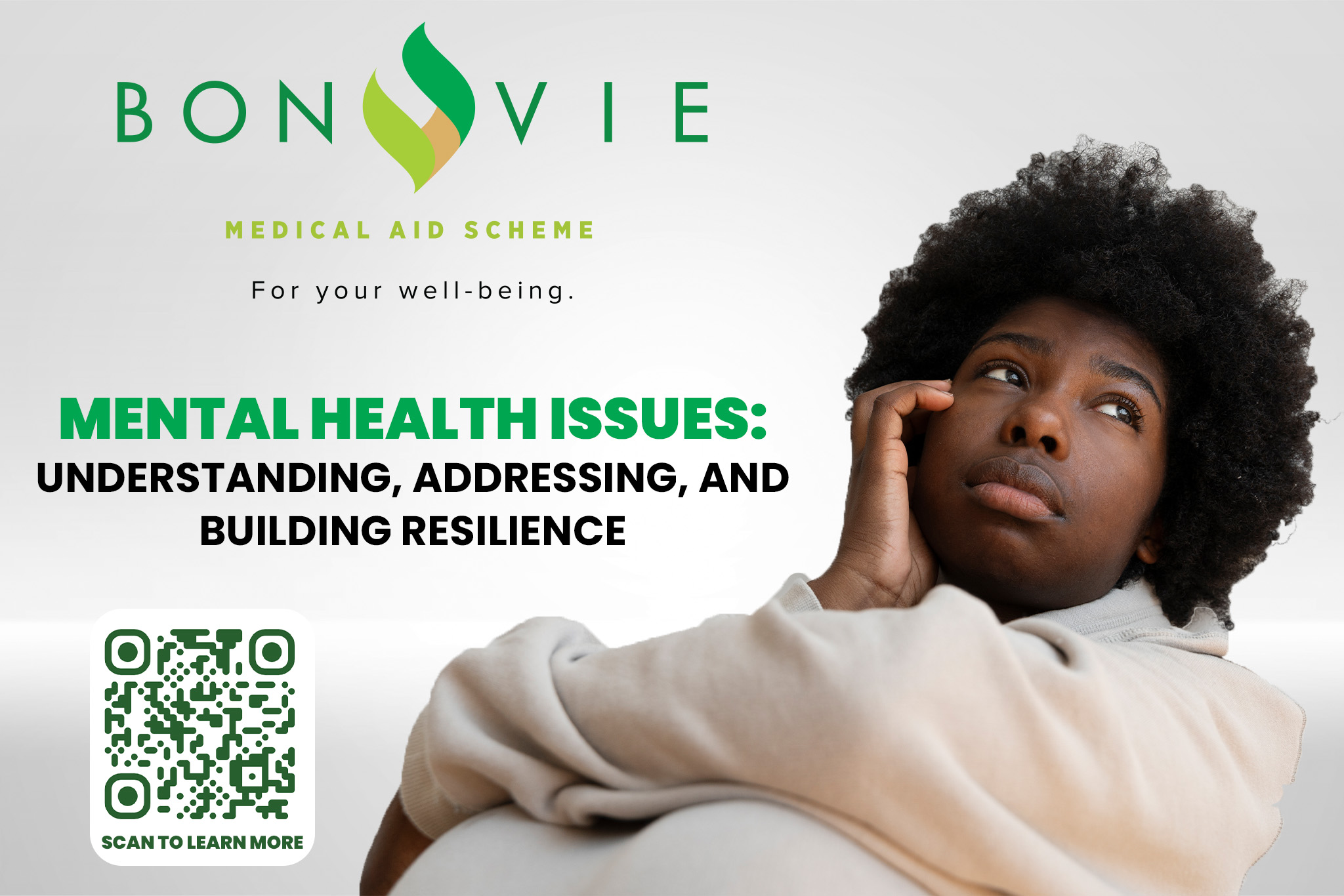
Mental health is an area that for many years, was misunderstood as only relating to psychotic patients or those with very extreme cases that required isolation or therapy sessions. Over time, we have realised that is very real in this fast paced world we live in, and plays a vital role to overall health just as physical health does. [1]
Mental health refers to emotional, psychological, and social wellbeing, good mental health does not mean the absence of stress or negative emotions. It means having the capacity to cope with life’s normal stresses and adapt when challenges arise. Existing on a spectrum, from thriving and resilience at one end to clinically significant conditions at the other, and when stressors overwhelm coping capacity for prolonged periods, mental health issues can develop.[2]
Common Mental Health Issues

Several conditions account for the majority of the global burden of mental illness.[3]
- Depression is characterized by persistent low mood, loss of interest or pleasure, fatigue, changes in sleep and appetite, and feelings of worthlessness. It affects over 280 million people worldwide.
- Anxiety disorders are the most prevalent mental health conditions globally, symptoms showing up as excessive worry, fear, and physical symptoms such as palpitations and shortness of breath that interfere with daily functioning.[4]
- Stress and burnout result from chronic exposure to work, financial, or caregiving pressures without adequate recovery. Burnout manifests as emotional exhaustion, cynicism, and reduced professional efficacy.[5]
- Substance use disorders often co-occur with depression and anxiety. People may use alcohol or other substances to self-medicate, which can worsen symptoms and create dependence.[6]
- Trauma-related disorders, including post-traumatic stress disorder (PTSD), can develop after exposure to violence, accidents, or loss. Symptoms include
Causes and Risk Factors
Mental health conditions arise from the interaction of biological, psychological, and social factors.[18] Biologically, genetics, neurotransmitter imbalances, and physical health conditions influence vulnerability. In the Zimbabwean context, currency instability, load shedding, food insecurity, and uncertainty about the future are significant chronic stressors that increase psychological distress. Winter in Southern Africa adds another layer, as reduced daylight and outdoor activity can affect mood and circadian rhythms.[8]
It is important to note that untreated mental health conditions can reduce quality of life, strain relationships, and increase the risk of chronic physical conditions such as hypertension and diabetes. Economically, mental illness contributes to absenteeism, presenteeism, and lost productivity. Globally, depression and anxiety alone cost the world economy an estimated USD 1 trillion per year in lost productivity.[9] Socially, untreated mental illness can contribute to family breakdown, interpersonal violence, and the intergenerational transmission of trauma. Early intervention improves outcomes and reduces long-term costs.[10]

Professional Help and recovery
Individuals should seek help if symptoms persist for more than two weeks, interfere with work or relationships, or involve thoughts of self-harm. Warning signs include significant changes in sleep, appetite, mood, and substance use.[11] In Zimbabwe, services are available through primary care clinics, district hospitals, psychiatrists and psychologists, with helplines like Lifeline Zimbabwe offering support.[12]
Recovery from mental illness is not always linear, but it is achievable. Recovery may mean full remission, symptom management, or developing a meaningful life despite ongoing challenges. Personal narratives of recovery provide hope and counter fatalistic beliefs. With appropriate treatment, social support, and self-management strategies, most people experience significant improvement.[13]
Conclusion
Mental health issues are common, treatable, and not a reflection of personal failure. The interaction of biological vulnerability, life stress, and environmental factors determines risk and resilience. Practical steps—regular sleep, exercise, sunlight, social connection, and timely professional help—form the foundation of mental health maintenance. By addressing stigma and building supportive environments, individuals and communities can reduce the burden of mental illness and promote wellbeing.[14]
References:
1. Patel V, Saxena S, Lund C, et al. The Lancet Commission on global mental health and sustainable development. _The Lancet_. 2018;392(10157):1553-1598.
2. World Health Organization. _Mental health: Strengthening our response_. WHO; 2022.
3. Keyes CLM. Mental illness and/or mental health? Investigating axioms of the complete state model of health. _J Consult Clin Psychol_. 2005;73(3):539-548.
4. Craske MG, Stein MB. Anxiety. _The Lancet_. 2016;388(10063):3048-3059.
5. Maslach C, Schaufeli WB, Leiter MP. Job burnout. _Annu Rev Psychol_. 2001;52:397-422.
6. Grant BF, Stinson FS, Dawson DA, et al. Prevalence and co-occurrence of substance use disorders and independent mood and anxiety disorders. _Arch Gen Psychiatry_. 2004;61(8):807-816.
7. American Psychiatric Association. _Diagnostic and Statistical Manual of Mental Disorders_. 5th ed. APA; 2013.
8. Chibanda D, Mesu P, Kajawu L, et al. Problem-solving therapy for depression and common mental disorders in Zimbabwe: Piloting a task-shifting approach. _Int J Ment Health Syst_. 2011;5:13.
9. Vigo D, Thornicroft G, Atun R. Estimating the true global burden of mental illness. _Lancet Psychiatry_. 2016;3(2):171-178.
10. Insel TR. Assessing the economic costs of serious mental illness. _Am J Psychiatry_. 2008;165(6):663-665.
11. American Psychological Association. _Warning signs of mental illness_. APA; 2020.
12. Ministry of Health and Child Care Zimbabwe. _National Mental Health Strategy 2019-2023_. MoHCC; 2019.
13. Slade M, Amering M, Farkas M, et al. Uses and abuses of recovery: Implementing recovery-oriented practices in mental health systems. _World Psychiatry_. 2014;13(1):12-20.
14. Moffitt TE, Caspi A, Taylor A, et al. How common are common mental disorders? Evidence that lifetime prevalence rates are doubled by prospective versus retrospective ascertainment. _Psychol Med_. 2010;40(6):899-909.