
Written by Lolitaire Moyo-Healey. M.Ost DO, UKIHCA-RHC for BonVie Medical Aid scheme
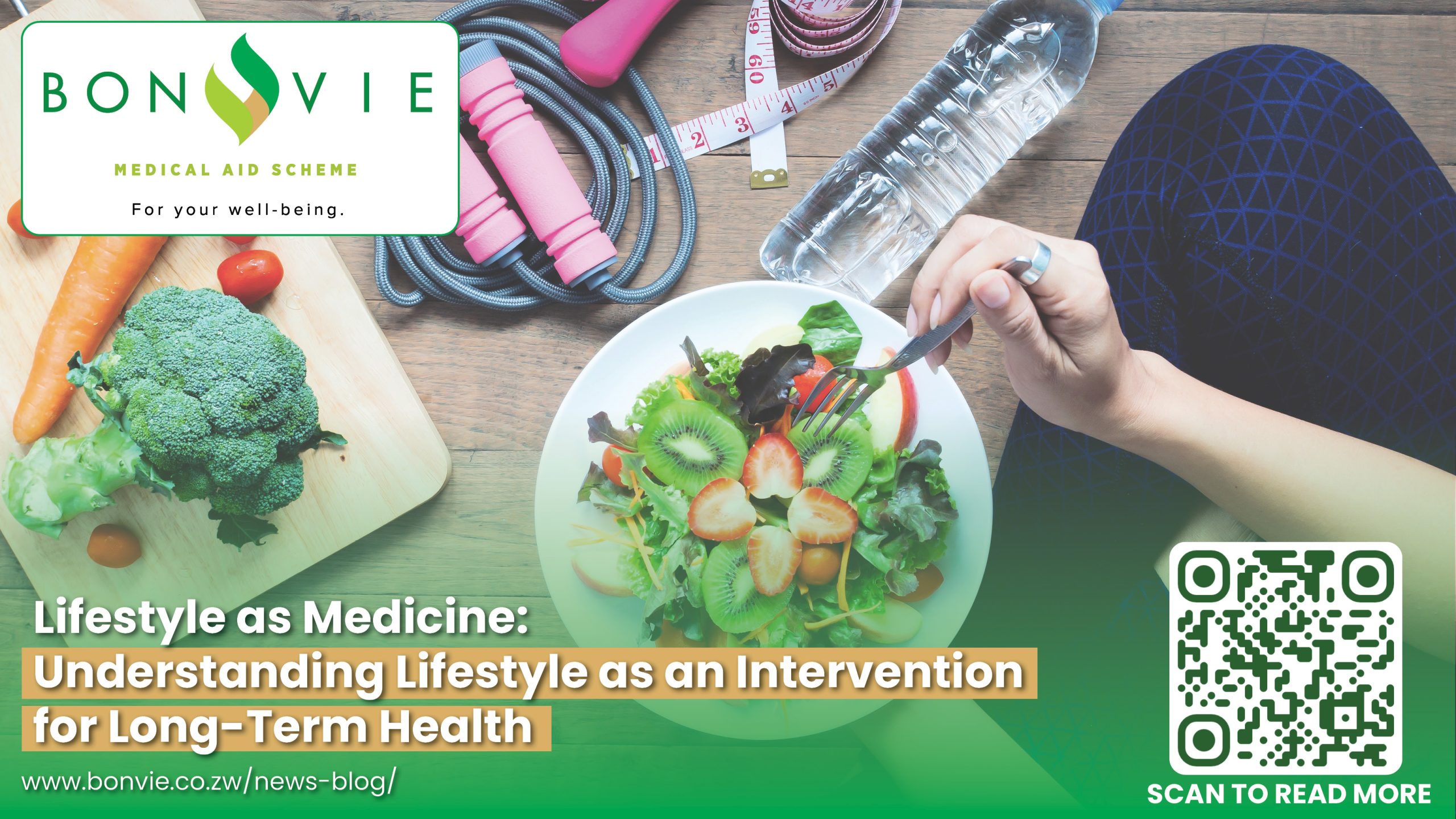
When you think about “medicine,” what comes to mind? Probably a prescription, a tablet, or a trip to the clinic. However, some of the most powerful tools for protecting your long-term health aren’t found in a pharmacy alone. They’re found in your daily choices which make-up your lifestyle.
Lifestyle medicine is a branch of clinical care that supports behaviour change across six key areas of daily life, using it as an effective intervention for preventing, managing, and even reversing chronic disease (1). In other words, this isn’t just “healthy tips”, it’s a recognised branch of medicine in its own right.
A Field Built on Decades of Evidence
Many chronic conditions develop quietly for years before a test or symptom ever reveals them. For example, fatty deposits in the arteries (the earliest stage of atherosclerosis) can already be present in children and teenagers, with measurable plaque found in the heart arteries of 1 in 6 asymptomatic teenagers in the US (2). Type 2 diabetes tells a similar story in that blood sugar and insulin resistance can slowly drift upward for as much as ten years before diagnosis, with blood vessel damage quietly beginning during that symptom-free window (3).
So lifestyle medicine is built on more than 75 years of research into this kind of silent progression. The Framingham Heart Study, begun in 1948, was one of the first to prove that everyday factors like diet, smoking, and inactivity directly drive heart disease (4). A few decades later by 1998, trial evidence was published that intensive lifestyle change alone (closely supervised by a GP) could reverse coronary artery disease (5). This evidence base is exactly what led to lifestyle medicine becoming a formally recognised discipline, with the American College of Lifestyle Medicine founded in 2004 and the British Society of Lifestyle Medicine following in 2016 (6).
The Six Pillars of Lifestyle Medicine

The British Society of Lifestyle Medicine breaks all of this evidence down into six interconnected pillars.
- Healthy eating. Build your meals around vegetables, fruits, whole grains, legumes, nuts, and seeds, and cut back on the ultra-processed food. This pattern is consistently linked to lower rates of heart disease, type 2 diabetes, and obesity- largely because it reduces the chronic, low-grade inflammation that sits behind so many long-term conditions (7).
- Physical activity. Aim for 150–300 minutes of moderate activity a week (think 20-40 minutes a day of brisk walking, cycling, or something similar) plus muscle-strengthening activity on two or more days (8). Walking to work, taking the stairs, or just being active around the house all count.
- Restorative sleep. Adults need at least 7 hours a night. Regularly getting less is linked to a higher risk of obesity, high blood pressure, type 2 diabetes, heart disease, and depression (9). A consistent bedtime, a wind-down routine, and less screen time in the evening go a long way.
- Mental wellbeing. A bit of stress now and then is normal but when it becomes chronic that’s when it starts to have an effect and things start to go wrong. Long-term stress raises blood pressure, weakens immune function, and increases cardiovascular risk (10). Deep breathing, regular movement, and giving yourself enough rest all help buffer against this.
- Healthy relationships. This one often gets overlooked, but supportive social connections reinforce every other pillar on this list. They help your motivation to exercise, your resilience under stress, and your chances of recovering well from illness (7). Investing time in family, friends, and community isn’t a “nice to have”, it’s healthcare and self-care.
- Minimising harmful substances. Cutting back on or avoiding tobacco and excess alcohol removes two of the biggest known drivers of noncommunicable disease worldwide (11). Even small reductions make a measurable difference over time.
None of these works in isolation. Poor sleep makes healthy eating harder. Strong relationships make it easier to stay motivated to exercise (7). They all feed into each other.
The Same Is True for Joint Health and Pain
It’s not just your heart and metabolism that follow this pattern, your joints do too. Joint pain and conditions like osteoarthritis are shaped by lifestyle factors long before a diagnosis ever comes through. Excess body weight, for instance, is recognised as the single most important modifiable risk factor for knee osteoarthritis (12). For every pound of body weight lost (approx 0.45kg), the load on the knee during walking drops by roughly four pounds per step (1.8kgs) (13). Multiply that across a day of walking, and you can see how meaningful that reduction becomes.
Physical activity plays a similarly protective role here too. Regular low-impact exercise strengthens the muscles that support the knee joints, and therefore reduces pain and improves function in people with osteoarthritis (14). Diet plays its part as well. A diet high in processed food is linked to the kind of chronic inflammation that underlies much joint pain. While a whole-food, anti-inflammatory way of eating can help ease inflammation(14). The habits that protect your health, also protect your joints.
Conclusion
Lifestyle is actually a powerful way to impact your health in the long-term. From protecting your heart health, avoiding or managing diabetes, and even taking care of your joints.
Pick one habit from one pillar. Start there, and build with the assurance that every good decision you make for your health today is undeniably having a long-term effect.
References
- British Society of Lifestyle Medicine. (2026). What is Lifestyle Medicine? bslm.org.uk
- Tuzcu, E.M., et al. (2001). High Prevalence of Coronary Atherosclerosis in Asymptomatic Teenagers and Young Adults. Circulation. ahajournals.org
- Sagesaka, H., et al. (2018), reported in ScienceDaily. Diabetes May Begin More Than 20 Years Before Diagnosis. sciencedaily.com
- Lippman, D., et al. (2024). Foundations of Lifestyle Medicine and its Evolution. Mayo Clinic Proceedings: Innovations, Quality & Outcomes. mcpiqojournal.org
- Ornish, D., et al. (1998). Intensive Lifestyle Changes for Reversal of Coronary Heart Disease. JAMA, 280(23), 2001-2007.
- Healio. (2025). Q&A: Lifestyle Medicine Has Gone Mainstream — Dean Ornish Was There From the Beginning. healio.com
- OT&P Healthcare. (2026). Lifestyle Medicine: Transform Your Health with the Six Core Pillars. otandp.com
- World Health Organization. (2020). WHO Guidelines on Physical Activity and Sedentary Behaviour. who.int
- Centers for Disease Control and Prevention. About Sleep and Your Heart Health. cdc.gov
- American Psychological Association. (2022). How Stress Affects Your Health. apa.org
- World Health Organization. (2025). Noncommunicable Diseases [Fact sheet]. who.int
- Silverwood, V., et al. (2013). Are Joint Injury, Sport Activity, Physical Activity, Obesity, or Occupational Activities Predictors for Osteoarthritis? A Systematic Review. Journal of Orthopaedic & Sports Physical Therapy. jospt.org
- Messier, S.P., Gutekunst, D.J., Davis, C., & DeVita, P. (2005). Weight Loss Reduces Knee-Joint Loads in Overweight and Obese Older Adults with Knee Osteoarthritis. Arthritis & Rheumatism, 52(7), 2026-2032.
- Messier, S.P., et al. (2013). Prescribing Optimal Nutrition and Physical Activity for Osteoarthritis. Evidence Synthesis. ncbi.nlm.nih.gov
Author

Lolitaire Moyo-Healey
M.Ost DO, UKIHCA-RHC, Founder, Registered Osteopath, Mindfulness Practitioner, Accredited Health + Life Coach