Written by
Lolitaire Moyo-Healey.
M.Ost DO, UKIHCA-RHC for BonVie Medical Aid scheme
You’ve maybe heard the phrase “sitting is the new smoking.” It sounds dramatic, but the research behind it is really clear: people in mostly-sitting jobs have a 16% higher risk of dying from any cause, and a 34% higher risk of dying from cardiovascular disease, than people in non-sitting jobs¹. The encouraging part is that this risk isn’t fixed. It has been shown that people who broke up their sitting throughout the day showed no increased risk at all compared to those in active jobs¹.
This is an important distinction. A gym session a few times a week is valuable, but it doesn’t cancel out eight hours of stillness at your desk. Your body needs regular movement throughout the day, not just at the beginning or end of it.
https://www.magnific.com
What Prolonged Sitting Does to Your Body
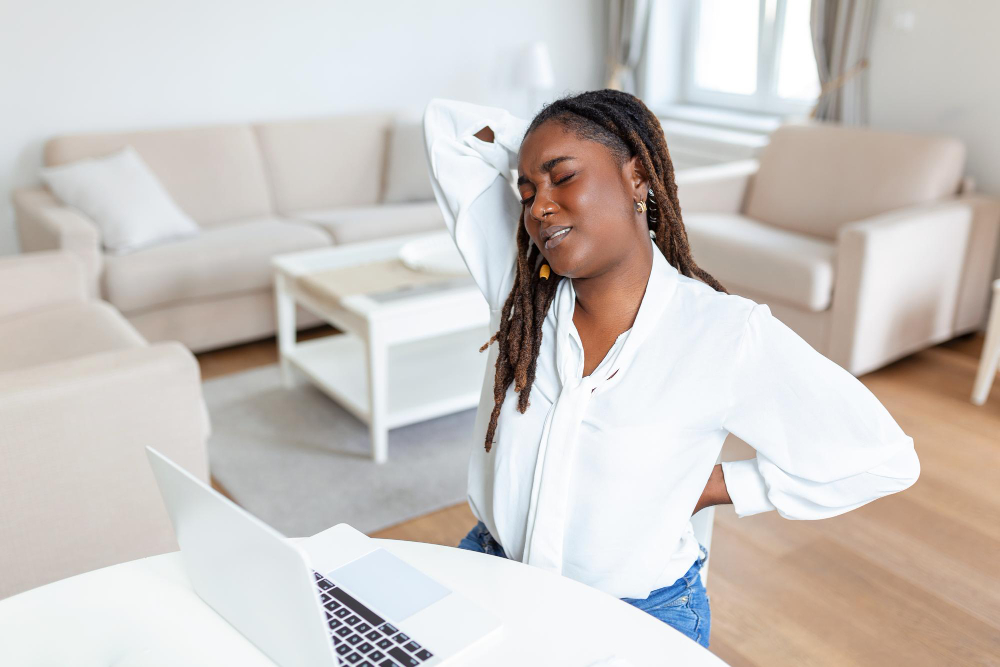
When you’re sedentary for long periods, several systems slow down. Circulation drops and fat metabolism becomes less efficient, raising cardiovascular risk¹. Your muscles use up less blood sugar, which over time can contribute to insulin resistance and type 2 diabetes². In addition more common complaints like back and hip pain, poor posture, sluggish digestion, weak leg circulation, and rising stress. It’s clear why office workers, especially those who sit for long uninterrupted stretches, can face a distinct health risk³.
Nine Ways to Build Movement into Your Workday
https://www.magnific.com
https://www.magnific.com
https://www.magnific.com
https://www.magnific.com
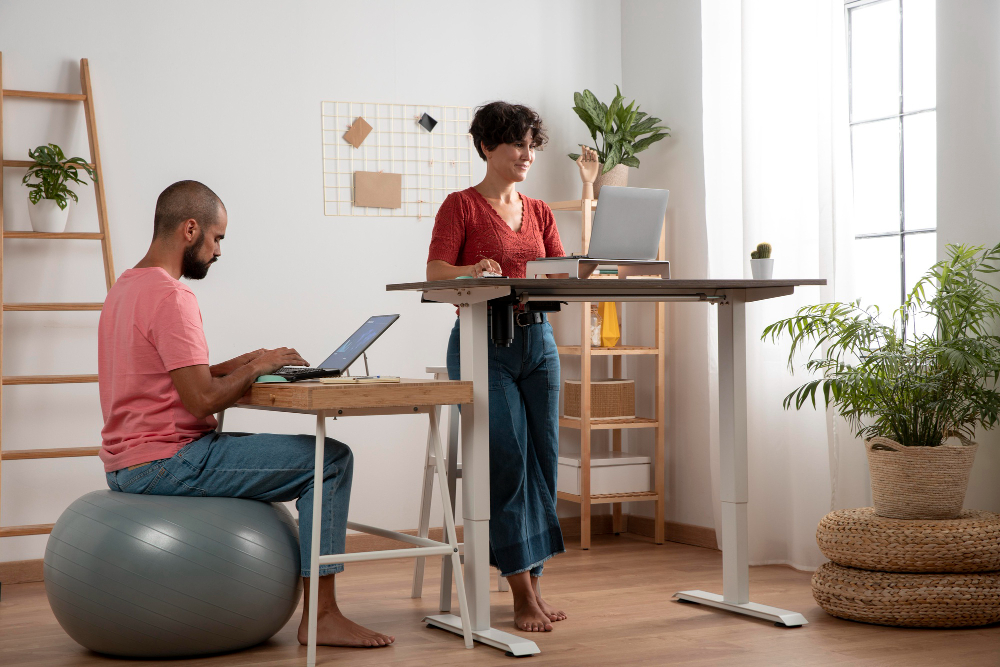
1. Try active sitting – Swapping your chair for an exercise ball for short periods engages your core muscles and can support posture. Alternate doing this with a proper chair so you don’t strain your back.
2. Set a movement timer – A simple app or browser plugin that nudges you every 30-60 minutes is one of the most effective low-cost interventions for reducing workplace sitting⁴. The Pomodoro technique is a great way to time focused times of work and regular intervals of rest.
3. Take walking meetings – Move calls or one-on-ones outdoors or around the office instead of defaulting to a boardroom.
4. Stretch at your desk – Shoulder rolls, neck stretches, and seated leg raises take seconds and relieve muscular tension.
5. Use your lunch break to move – A brisk walk or short workout during your break adds meaningful activity without cutting into work time.
6. Consider a sit-stand desk if you can – Studies show sit-stand desk users report fewer lower-back issues, less fatigue, and higher engagement than those using fixed desks⁵. Alternating between sitting and standing helps regulate blood sugar more effectively than staying in one position⁶.
7. Take the stairs, every time – It’s a free, built-in way to raise your heart rate several times a day and strengthen the muscles in your legs
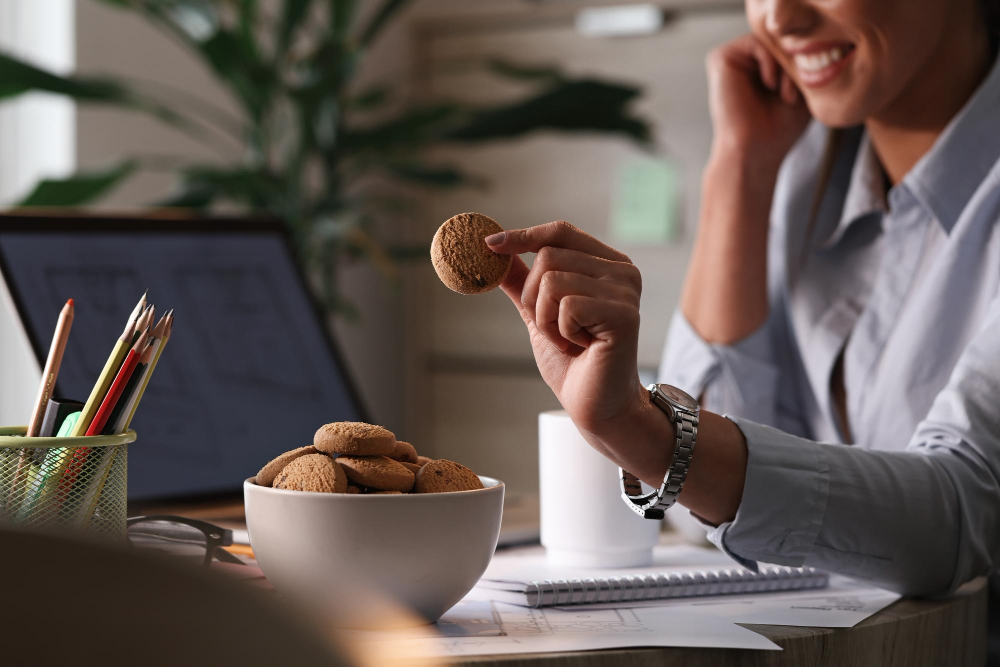
8. Pack steady-energy snacks – Fruit, nuts, and greek yoghurt sustain energy better than sugary options that spike and crash your blood sugar. They also contribute to increasing your metabolism
9. Move every two hours – Set a habit: 20 squats, a few push-ups, or even a deliberate walk to the bathroom and back. Make it a shared office habit if you can, you’re more likely to stick with it as a group⁴.
Conclusion
Small, regular movement throughout the day matters more than a single intense workout squeezed in before or after work. Any change you start with today will make a difference.
References
ScienceInsights. What is a sedentary job? Definition and health risks.
World Health Organization. (2020). Guidelines on physical activity and sedentary behaviour.
Clemes, S.A. et al. The contribution of office work to sedentary behaviour.
4. Systematic review: computer prompt interventions to reduce sedentary behaviour among office workers.
Garland, E. et al., “Stand Up to Work” study.
Thorp, A.A. et al. (2014). Alternating bouts of sitting and standing attenuate postprandial glucose responses.
Author
Lolitaire Moyo-Healey
M.Ost DO, UKIHCA-RHC, Founder, Registered Osteopath, Mindfulness Practitioner, Accredited Health + Life Coach