
Written by Lolitaire Moyo-Healey. M.Ost DO, UKIHCA-RHC for BonVie Medical Aid scheme
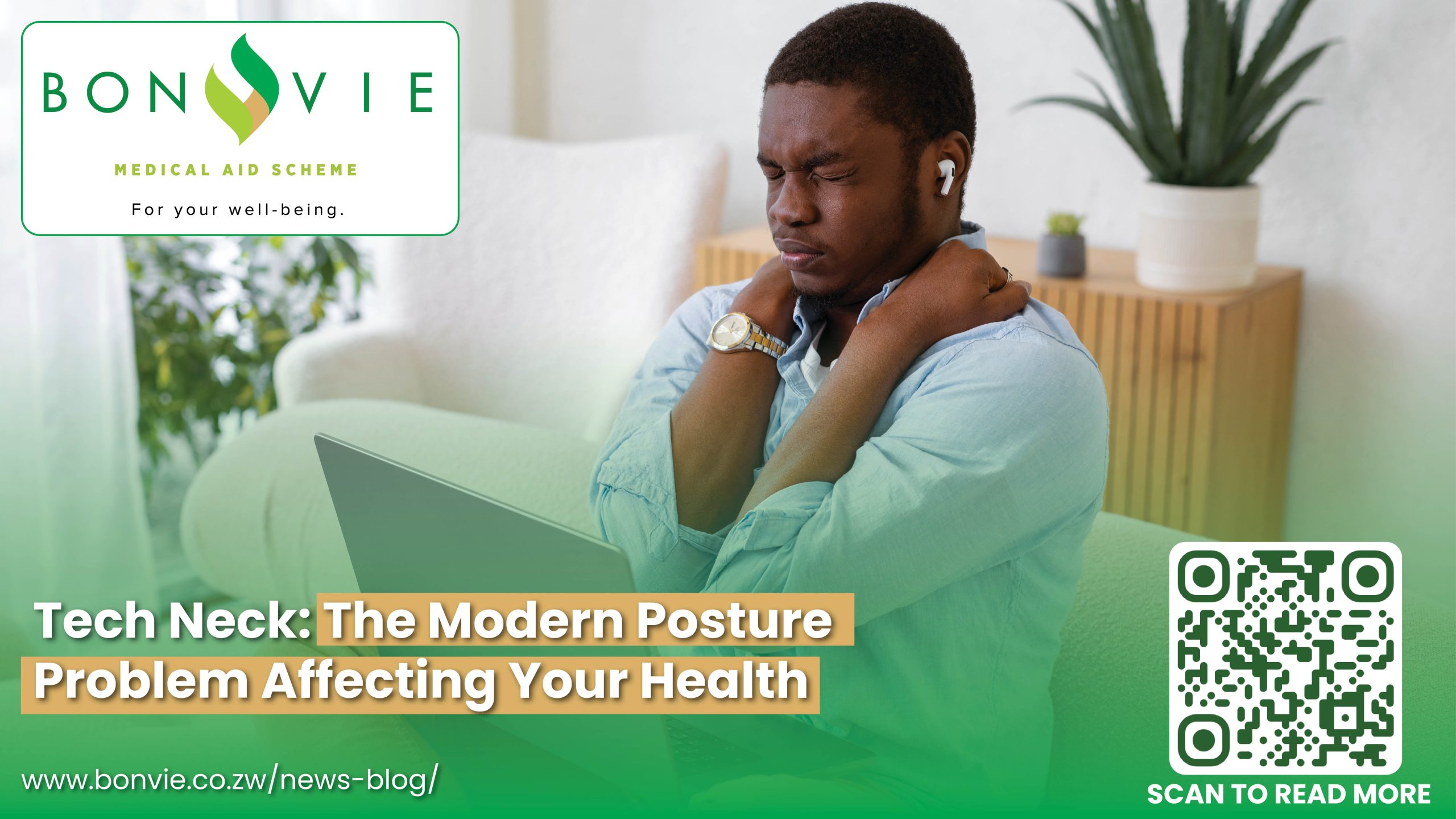
The rise of smartphones, laptops, and tablets over the last 25-30 years has quietly created a new kind of public health problem. Chances are that it affects you right now, as you read this. It is called tech neck (aka text neck), and researchers have described it as a global epidemic of the modern era [1].
Tech neck is a relatively new term that describes neck pain and damage resulting from looking down at electronic devices for prolonged periods. Though it may sound simple, the mechanics behind it tell a different story and the health consequences go far beyond just a stiff neck.
What Is Actually Happening to Your Neck?
Your head weighs roughly 4-5 kg in a neutral, upright position. When you bend your head forward to look at your phone or laptop, the load increases in the joints, ligaments, and muscles of your neck. Research shows this force can rise by 20-60%, depending on how far forward you lean [2], and this strain accumulates over hours of daily screen use.
Additionally, screens tend to keep you unusually still for prolonged periods. The neck remains locked in one position for a long time and this allows strain to build gradually [3]. This is why many people do not notice discomfort until the point when they change position and the stiffness sets in.


The Physical Symptoms You May Recognize
Tech neck produces a range of physical symptoms, and you may already be living with some of them [3]:
- Pain or tenderness at the back of the neck, sometimes directly over the spine
- Aching or tightness that spreads into the shoulders and upper back
- Stiffness or a reduced ability to turn and tilt your head freely
- Headaches, or a dull ache that spreads toward the back of your head
- Pain that travels down into the arms or hands caused by pressure on the nerves that run through the neck
- General muscle fatigue and aching in the neck, shoulders, and upper back that builds across the day
Many people treat these symptoms in isolation without realising that the common thread is posture.
Beyond Pain: Four Ways Tech Neck Affects Your Health

Pain is not the only consequence of this posture. Other effects include :
Breathing
When your head sits forward for long periods, it changes the way your whole upper body is aligned. This makes it harder for your lungs to fully expand and makes the airways in your face and neck smaller. Over time without you knowing, your breathing can become shallower meaning your body is getting less oxygen than it should [4].
Memory and focus.
The position of your head affects blood flow to your brain. Tech neck is linked to reduced concentration, memory difficulties, and poorer sleep [5, 6]. If you regularly feel mentally foggy after long hours at a screen, your posture may be playing a role.
Mood and stress.
Holding a forward head posture for extended periods can keep your body in a low-level stress state, even when you are sitting still and resting. Over time, this can contribute to feelings of anxiety, low mood, and a general sense of tension [7].
Balance.
This one matters more as you get older. Tech neck gradually shifts your centre of gravity forward, and research shows it can quietly reduce your ability to balance, increasing your risk of falls, particularly in your later years [8].
Simple Habit Changes That Make a Real Difference
Small, consistent adjustments to your daily habits can reduce your risk of the the effect of tech neck. Some adjustments to try:
- Bring your screen to you, not your head to the screen. Raise your phone, tablet, or laptop to eye level rather than bending your neck downward to meet it.
- Check your workstation. If you work at a desk, your monitor should sit at eye level. Leaning forward because your screen is too low (eg working on a laptop) or too far away is a very common problem.
- Move your neck regularly. Rotating your neck slowly ten times clockwise and ten times anti-clockwise during screen breaks helps relieve muscular tension and improve movement [4].
Conclusion
The habits you build around screen use are genuine health decisions in the context of tech neck. Your musculoskeletal health, breathing, energy levels, mood, and your long-term mobility are all connected to how you carry yourself through the day. What begins as a postural habit is much easier to address early than after years of accumulated strain.
References
- Grasser T, et al. Defining text neck: a scoping review. European Spine Journal. 2023;32(10):3463–3484. https://link.springer.com/article/10.1007/s00586-023-07821-2
- Hansraj KK. Assessment of stresses in the cervical spine caused by posture and position of the head. Surgical Technology International. 2014;25:277–279.
- Damasceno GM, et al. Assessment of forward head posture in individuals with and without chronic neck pain: A cross-sectional study. Journal of Bodywork and Movement Therapies. 2023.
- Zafar H, et al. Effect of Different Head-Neck Postures on the Respiratory Function in Healthy Males. BioMed Research International. 2018.
- Lee S, et al. Effect of Forward Head Posture on Resting State Brain Function. Healthcare. 2024;12(12):1162.
- Kim D, et al. Postural supporting cervical traction workstation to improve resting state brain activity in digital device users. PMC. 2024.
- Moustafa IM, et al. “Is forward head posture relevant to autonomic nervous system function and cervical sensorimotor control? Cross-sectional study.” Gait and Posture. 2020;77:29–35.
- Lin G, et al. “The relationship between forward head posture, postural control and gait: a systematic review.” Gait and Posture. 2022;98:316–329.
Author

Lolitaire Moyo-Healey
M.Ost DO, UKIHCA-RHC, Founder, Registered Osteopath, Mindfulness Practitioner, Accredited Health + Life Coach