Written by Professor Stephen Mashingaidze and Rumbidzai Mukori-William for BonVie Medical Aid scheme
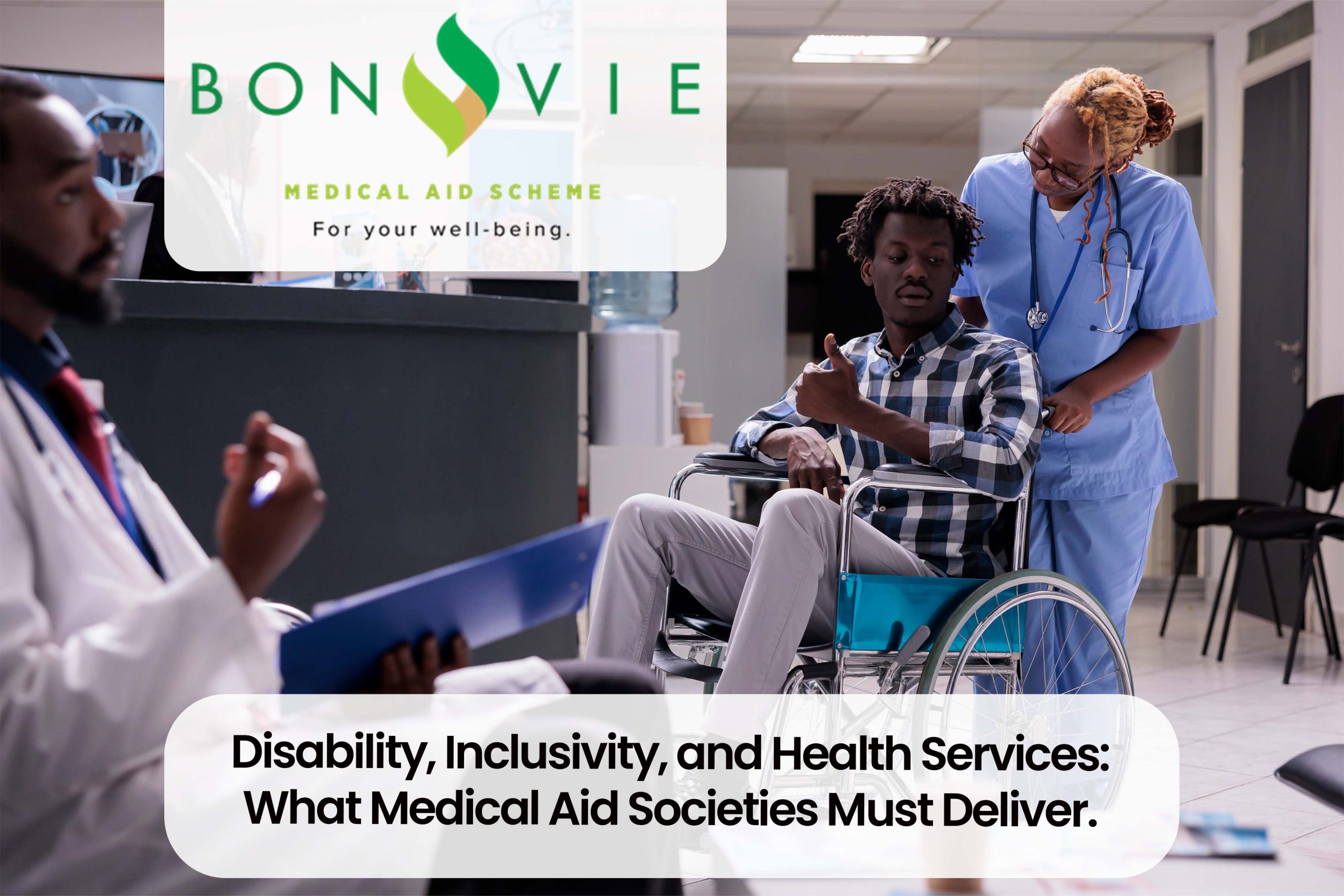
Disability is not merely a medical condition—it is a social experience shaped by access (or lack of it) to health services, assistive devices, and inclusive policies. In Zimbabwe (and across the globe), medical aid schemes sit at a crucial intersection of finance, health delivery, and social responsibility. Their role is to ensure that members with disabilities receive dignified, affordable, and comprehensive care. This article explores how societies can embed disability‑inclusive practices, the challenges they face, and concrete steps toward true equity—while keeping the narrative grounded in human rights, economic sense, and lived realities.
Why Inclusivity Matters in Health Coverage
- Human Right – The United Nations Convention on the Rights of Persons with Disabilities (UNCRPD, Article 25) obliges states and, by extension, insurers to provide health services without discrimination. Zimbabwe ratified the CRPD in 2014, committing to safeguard the health rights of its citizens, including those with disabilities [1].
- Economic Sense – Inclusive coverage reduces long‑term costs. When preventive care, early intervention, and assistive devices are available, complications decline, hospital admissions fall, and productivity rises—benefiting both members and the scheme’s bottom line [2]. Depending on the schemes, some services such as rehabilitation, therapy and assistive devices (wheelchairs, hearing aids, prosthetics) may be limited.
- Social Responsibility – Health equity builds stronger, resilient communities. When a medical aid society meets the needs of its most vulnerable members, it signals a commitment to social cohesion and shared prosperity [3]. As there is a level of stigmatization attached with members being hesitant to disclose disability status, this leads to data deficiency at medical aids and schemes
Core Pillars of Inclusive Health Services

Universal Access
Zero‑cost or subsidised premiums for persons with disabilities; no exclusion based on pre‑existing conditions. Flat premium tiers for low‑income members; waiver for disability‑related claims [7].
Comprehensive Benefits
Coverage for assistive devices, prosthetics, hearing aids, mobility aids, home modifications, transport to facilities. Annual device allowance (e.g., ZWL $30 000) with no cap on replacements.
Rehabilitation & Therapy
Full continuum: physiotherapy, occupational therapy, speech therapy, mental health counselling. 30 sessions/year for any disability diagnosis without prior authorization [7].
Care Coordination
Dedicated case managers for members with complex needs (multi‑disability, chronic illness). Navigator program offering 24/7 hotline and appointment reminders [8].
Training & Awareness
Staff sensitised on disability etiquette, sign language basics, cultural competence. Quarterly workshops with certification tracked in HR [9]. These pillars align with the World Health Organization’s (WHO) Disability‑Inclusive Health Framework (2022) and the International Labour Organization’s (ILO) Code of Practice on Managing Disability in the Workplace [10].
Recommendations (Actionable)
1. Policy Alignment – Revise benefit schedules to mirror the National Disability Policy (2021) and UNCRPD obligations. Explicitly list covered assistive devices and remove caps [15].
2. Benefit Caps Removal – Eliminate annual limits on physiotherapy, occupational therapy, and mental health sessions. Adopt a needs‑based model rather than a session quota [16].
3. Subsidised Premiums – Introduce tiered subsidies for low‑income members with disabilities, possibly co‑funded by government health grants or development partners.
4. Digital Accessibility – Ensure mobile apps/websites comply with WCAG 2.1 (screen‑reader compatibility, voice navigation, easy‑read content).
5. Partnerships – Collaborate with NGOs (Zimbabwe Disability Forum, Leonard Cheshire Zimbabwe) and DRCs (Disability Rehabilitation Centres) for device procurement, training, and community outreach.
6. Monitoring & Reporting – Publish annual inclusivity metrics: coverage ratios, claim approval rates for disability claims, device provision timelines, and member satisfaction scores.
7. Staff Training – Mandate quarterly disability awareness modules, including sign language basics and person‑first communication. Track completion rates in HR dashboards.

Conclusion
It is important to note that when medical aids take their role in society, the results anticipated include increased device uptake, decreased hospital readmission for fall injuries, increased member satisfaction and reduction of chronic care claims. Medical aid schemes hold the financial and operational levers to turn that vision into real, measurable health outcomes. Let’s ensure no one is left behind.
References
- Ndhlovu, E. and Mudzingwa, N. (2022) “Disability Inclusion and Accessibility in Zimbabwe: Sharing Views and Experiences of Blind and Partially Sighted Persons Living in the City of Bulawayo”, _The Journal of Public Space_, 7(2), pp. 269–278. doi: 10.32891/jps.v7i2.1606. [2]
- United Nations (2006) _Convention on the Rights of Persons with Disabilities_. [2]
- UNESCO (2021) _Introduction to Disability Data Collection and the Washington Group Question Sets_. [2]
- World Blind Union (2020) _Amplifying Voices: Our Lives Our Say_. [2]
- Zimbabwe Government (1996) _Disabled Persons Act_, Government Printer, Harare. [2]
- Mandipa, E., Manyatera, G. (2013) ‘Zimbabwe’, in Ngwena, C., Grobbelaar‑du Plessis, I., Combrinck, H. and Kamga, S. D. (eds.) _African Disability Rights Yearbook_, Pretoria University Law Press, Pretoria, pp. 287–308. [2]
- Mlambo, F., Ndhlovu, E. (2021) “Access to Information on COVID‑19 For Persons with Visual Impairment in Masvingo Zimbabwe”, _AfriFuture Research Bulletin, Transforming Africa’s Future Today_, 1(2), pp. 36‑46. [2]
- Moyo, T. (2018) “Zim endorses African Charter on Disabled Persons”, _The Chronicle_. Available at: (link unavailable) [2]
- Mtetwa, E. (2011) “The dilemma of social difference: disability and institutional discrimination in Zimbabwe”, _Australian Journal of Human Rights_, 18(1), pp. 169‑185. [2]
- Mugumbate, J. (2016) “Social justice and disability policy in Southern Africa”, _Journal of Social Development in Africa_, 31(2), pp. 7‑24. [2]
- Choruma, T. (2007) _The Forgotten Tribe, Experiences of People with Disabilities in Zimbabwe_. London, Progressio. [2]
- Lang, R., Charowa, G. (2007) _DFID scoping study: Disability issues in Zimbabwe_, Department for International Development, London. [2]
- Mandipa, E. (2013) “New constitution disability friendly”, _Herald_, 19 June. [2]
- The Chronicle (2017) “Zimbabwe public transport system not safe and accessible to persons with disabilities”. Available at: (link unavailable). [2]
- UNICEF (2013) _The State of the World’s Children, Children with Disabilities: From Exclusion to Inclusion_. [2]
- Chimedza, R., Peters, S. (2001) _Disability and special needs education in an African context: Putting theory into practice from the perspective of different voices_, College Press, Harare.[2]
Authors