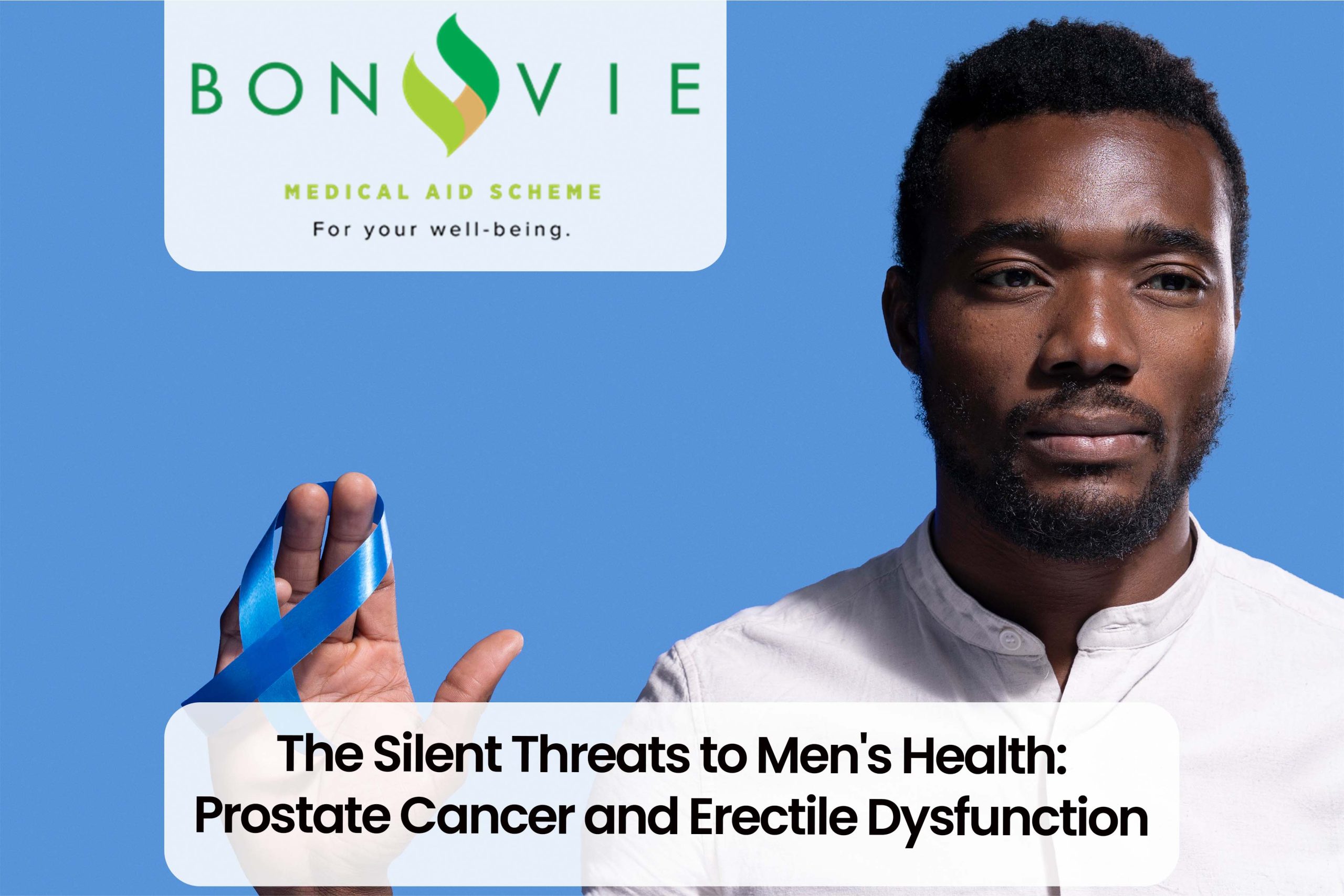
The Silent Threats to Men’s Health: Prostate Cancer and Erectile Dysfunction
Written by Professor Stephen Mashingaidze and Rumbidzai Mukori-William for BonVie Medical Aid scheme
As men, we often prioritize our work, family, and social lives, but neglect our own health. However, prostate cancer and erectile dysfunction (ED) are two significant health concerns that affect millions of men worldwide. As we round up the last week of November, we will explore the risks, symptoms, and treatment options for these conditions, and discuss the importance of men’s health screening.
Erectile Dysfunction: The Unspoken Issue
Erectile dysfunction is a common condition that affects millions of men worldwide. It is characterized by the inability to achieve or maintain an erection sufficient for sexual intercourse. It is key to note that erectile dysfunction is not just a sexual issue, but a symptom of underlying health problems, such as cardiovascular disease, diabetes, and hypertension. According to a leading nutritionist in Zimbabwe. Hence addressing ED can help identify and manage these underlying conditions.
Image Courtesy of Freepik
The Link Between Prostate Cancer and ED
Prostate cancer treatment, such as surgery and radiation, can cause ED. Additionally, ED can be a symptom of prostate cancer. Men who experience ED should seek medical attention, as it can be an early warning sign of prostate cancer. As a reminder, prostate cancer is the second most common cancer in men, with over 1.4 million new cases diagnosed worldwide each year (1). In Zimbabwe, prostate cancer is the leading cause of cancer-related deaths among men (2).Top urologist in Zimbabwe noted that prostate cancer is a silent killer because it often has no symptoms in its early stages, and if left untreated, it can spread to other parts of the body, making treatment more challenging. Hence regular screening is advised and loved ones taking note of any changes in urination frequency, delayed time in urination and blood in semen. Men over 50 are at higher risk, with more cases of early onset prostate cancer under 55, with very are cases in the 20s age group. African American men are at higher risk of aggressive cancer and early onset. Side effects of treatment can lead to a growing area of concern, known as erectile dysfunction.
Global Statistics on ED
Image Courtesy of Freepik
Once considered a taboo, it is a growing area of interest, due to the high number of cases globally, with ED affecting approximately 322 million men worldwide, with numbers expected to rise by 2025 (5). In Zimbabwe, the prevalence of ED is estimated to be around 60%, with at least 80% of men experiencing ED at some point in their lives (6).
Causes and Risk Factors for ED
ED is often linked to underlying health conditions, such as diabetes, obesity, and heart disease. Other factors contributing to ED include: – Age: ED becomes more common with age, affecting 26% of men under 40 and 70% of men over 70, – Lifestyle: Smoking, physical inactivity, and poor diet. – Psychological factors: Stress, anxiety, and depression. – Alcohol impairs nervous system functioning by slowing it down and impairing erection time, and chronic high consumption causes a decrease in testosterone levels and damage to nerves and blood vessels.
Image Courtesy of Freepik
Image Courtesy of Freepik
Prevention and Treatment
– Screening: Men over 50 should undergo annual prostate-specific antigen (PSA) tests and digital rectal exams (DREs) – Healthy Diet: A diet rich in fruits, vegetables, and whole grains can help reduce the risk of ED by increasing blood flow and vascular function. Fruits high in flavonoids, such as berries, apples, and pears, have been proven to reduce the risk of ED by 11% in men who regularly consume these. Nitrite-rich foods are essential for reducing inflammation; leafy greens, beetroot leaves, mustard greens, and pumpkin leaves can be added to meals. – Exercise: Regular exercise can help reduce the risk of ED and prostate cancer, focus more on cardio, high-intensity and pelvic strengthening workouts. – Treatment: Treatment options for prostate cancer include surgery, radiation, and hormone therapy – Medications: Phosphodiesterase-5 (PDE5) inhibitors can help treat ED. – Lifestyle changes: Exercise, weight loss, and stress management can help improve ED symptoms significantly, hence a multi-faceted approach is essential for proper care during treatment and as a preventative initiative.
Conclusion
Prostate cancer and ED are significant health concerns that affect millions of men worldwide. By increasing awareness, getting screened, and maintaining a healthy lifestyle, men can reduce their risk of these conditions. It’s time for men to take control of their health and prioritize their well-being.
References
1. WHO (2020). Prostate Cancer. 2. Zimbabwe Cancer Registry (2020). Prostate Cancer Incidence and Mortality. 3. American Cancer Society (2020). Prostate Cancer Screening Guidelines. 4. National Institute of Diabetes and Digestive and Kidney Diseases (2020). Erectile Dysfunction. 5. Global Study on Erectile Dysfunction (2020). 6. Zimbabwe Demographic and Health Survey (2023-24).