Written by Professor Stephen Mashingaidze and Rumbidzai Mukori-William for BonVie Medical Aid scheme
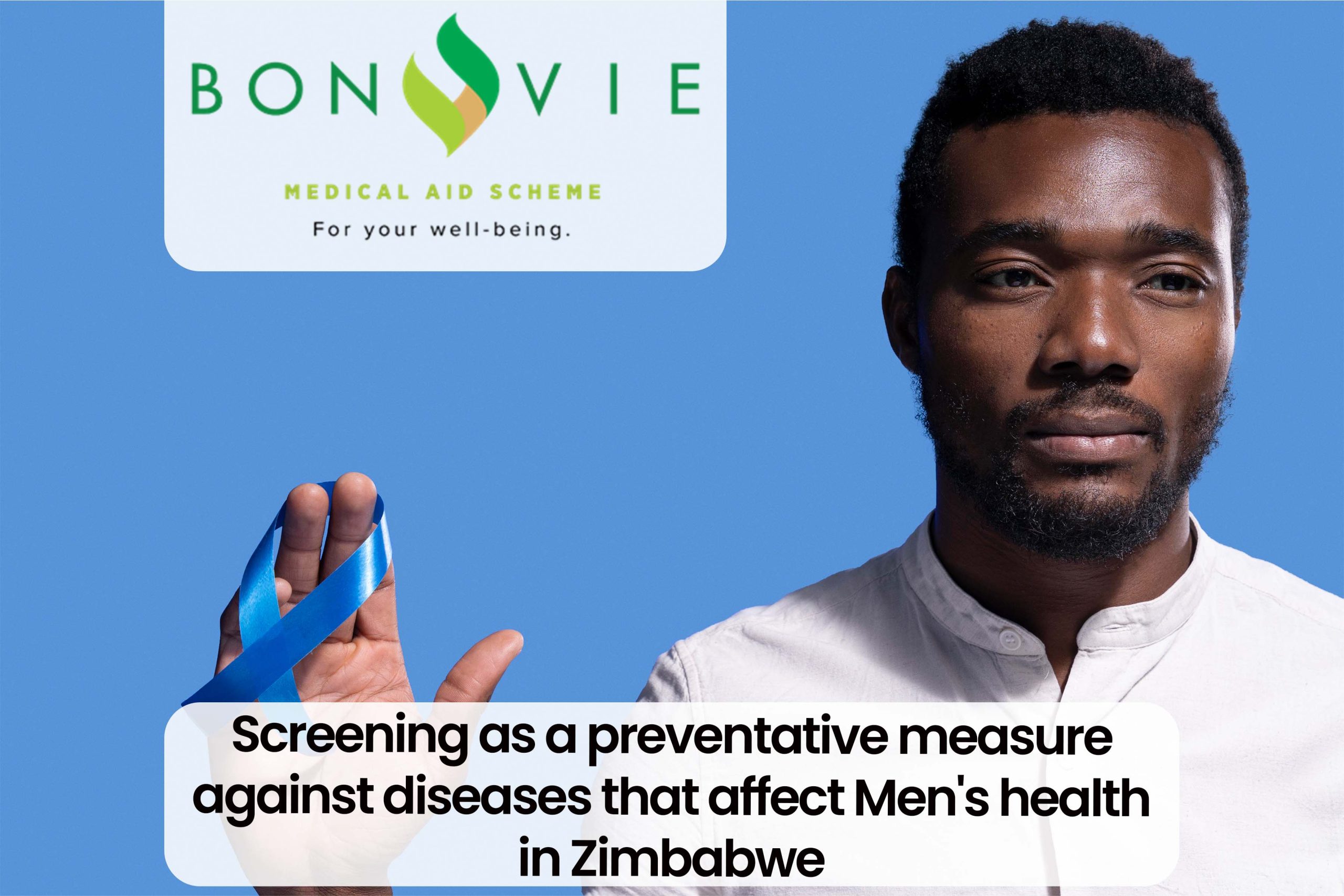
Despite the increased rate of awareness campaigns, men’s health is a significant health concern for men in Zimbabwe, with increasing incidence and mortality rates [1]. As men tend to seek health assistance, when the disease has progressed due to cultural beliefs, fear of being seen as weak and other factors related to manhood myths of being tough and not emotional. Early detection and prevention of cancer, non communicable diseases such as diabetes, high blood pressure and mental health ailments are crucial in reducing the burden locally. This article aims to provide an overview of diseases that affect men, risk factors, early detection methods, and prevention strategies in Zimbabwe.
What does men's health awareness target?
Men’s health awareness is key for early detection of diseases using regular screenings , done after a specific time. Frequency varies based on age, ethnicity, health history, symptoms and general wellness. Diseases such as prostate cancer ,a type of cancer that affects the prostate gland, a small gland in the male reproductive system [2]. Requires more routine checkups, with men over the age of 40 years being advised to have it done annually, although due to the increased number of cases at earlier years, it is advisable to check with your health care provider if screening is required at an earlier age.

Risk Factors
Several risk factors increase a man’s likelihood of developing lifestyle or non communicable diseases:
– Age:Risk increases with age, with most cases diagnosed in men over 50 years [3].
– Family History: Men with a family history of cancer, diabetes, mental health challenges, high blood pressure are at higher risk [4].
– Ethnicity: African men are at higher risk of specific cancers [5].
– Diet: A diet high in animal fats and low in fruits and vegetables may increase risk [6].
Early Detection Methods

Early detection of lifestyle or non communicable diseases can improve treatment outcomes.These are done by Bonvie and are open to all males, as a preventative measure to ensure that detection is done in good time.
The following methods are used:
-Anthropometric measurements of body mass index, body fat %, visceral fat %, hydration levels and skeletal muscle are key parameters that provide a comprehensive analysis of risk factors to diseases. Early detection of common non communicable diseases are usually picked up during these routine checkups.
-Mental health screening using questionnaires provides information on specific diseases that one is at risk of such as depression, anxiety and others.
– Digital Rectal Examination (DRE): A healthcare provider examines the prostate gland through the rectum to check for abnormalities [7].
– Prostate-Specific Antigen (PSA) Test: A blood test that measures PSA levels, which can indicate prostate cancer [8].
– Transrectal Ultrasound (TRUS): An ultrasound test that uses sound waves to create images of the prostate gland [9].
Prevention Strategies
Several strategies can help prevent non communicable diseases and cancers or reduce its risk:
– Healthy Diet: Eating a diet rich in fruits, vegetables, and whole grains, and low in animal fats [10]. This is important as certain foods feed the development of diseases that begin with symptoms and if left untreated can lead to illness. Understanding the role that healthy nutrition plays is a simple way to help improve your overall health.
– Regular Exercise: Engaging in regular physical activity to maintain a healthy weight [11]. It also reduces risk of diabetes, improves cardiac health, circulation of blood and improves mental health.
– Avoiding Tobacco: Quitting smoking and avoiding tobacco products [12]. These increase risk of cancers, erectile dysfunction, infertility and respiratory diseases as they destroy blood vessels and damage sperms.
– Limiting Alcohol: Drinking alcohol in moderation, if at all [13]. Risk of cancers, liver damage, mental health, high blood pressure, heart failures and erectile dysfunction. World Health Organization recommends no more than 2 units per seating.

Conclusion
Non communicable diseases are a significant health concern for men in Zimbabwe. Early detection and prevention are crucial in reducing the growing disease burden. Men in Zimbabwe can take steps to reduce their risk by getting screened, maintaining a healthy lifestyle, and knowing their family history.
References
1. Zimbabwe National Cancer Registry. (2020). Cancer Incidence and Mortality in Zimbabwe. Harare: ZNCR.
2. American Cancer Society. (2020). What is Prostate Cancer? Atlanta: ACS.
3. National Cancer Institute. (2020). Prostate Cancer Risk Factors. Bethesda: NCI.
4. Johns Hopkins Medicine. (2020). Prostate Cancer Risk Factors. Baltimore: JHM.
5. African Journal of Urology. (2019). Prostate Cancer in Africa. 25(1), 1-8.
6. Journal of Nutrition. (2018). Diet and Prostate Cancer Risk. 148(12), 2241-2248.
7. American Urological Association. (2020). Digital Rectal Examination. Linthicum: AUA.
8. National Cancer Institute. (2020). Prostate-Specific Antigen (PSA) Test. Bethesda: NCI.
9. (link unavailable) (2020). Transrectal Ultrasound (TRUS). Oak Brook: RSNA.
10. Journal of the Academy of Nutrition and Dietetics. (2019). Diet and Prostate Cancer Prevention. 119(12), 2041-2048.
11. Journal of Physical Activity and Health. (2018). Physical Activity and Prostate Cancer Risk. 15(10), 741-748.
12. Journal of the National Cancer Institute. (2019). Tobacco and Prostate Cancer Risk. 111(10), 1021-1028.
13. Journal of Studies on Alcohol and Drugs. (2018). Alcohol and Prostate Cancer Risk. 79(4), 541-548.
14. Zimbabwe Ministry of Health and Child Care. (2020). Prostate Cancer Screening Guidelines. Harare: ZMOHCC.
15. World Health Organization. (2020). Healthy Lifestyle Recommendations. Geneva: WHO.
16. American Cancer Society. (2020). Prostate Cancer Risk Factors. Atlanta: ACS.
Authors